


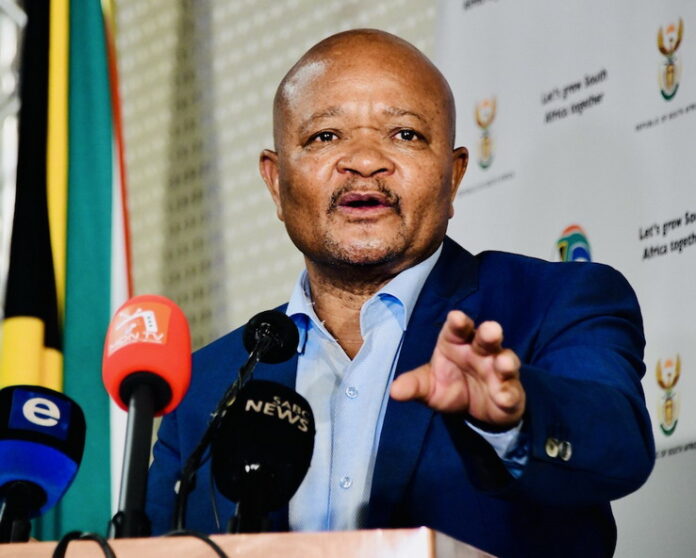
Minister of Police Senzo Mchunu has provided a comprehensive overview of actions taken following his declaration on 15 July 2024 to clamp down on rising crime levels. The update included a detailed account of initiatives introduced to combat gangsterism, drug-related crimes and public perceptions of deteriorating safety.
In response to parliamentary questions posed by Advocate Shameemah Salie, Member of Parliament for Al Jama’ah, Mchunu said the commitment made ahead of the 2024 Budget Vote had been underpinned by the ongoing implementation of the Integrated Crime and Violence Prevention Strategy (ICVPS), which was adopted by Cabinet in 2022. The strategy promotes a holistic approach to reducing violent crime and is aligned with national planning frameworks such as the 2016 White Papers on Policing and the National Development Plan: Vision 2030.
Central to this approach is “Operation Shanela”, a high-density, intelligence-led initiative that focuses on stabilising crime in identified hotspots through weekly coordinated operations. This operation involves close cooperation with other government departments, law enforcement agencies, and civil society partners. Mchunu confirmed that Operation Shanela will be further intensified during the 2025/26 financial year, as reaffirmed by the President during the most recent State of the Nation Address.
Additional efforts include the rollout of Firearm Investigation Units in high-crime provinces, the establishment of 20 permanent Economic Infrastructure Units, and the continuation of Integrated Extortion Investigation Teams, particularly targeting extortion in the construction sector. The SAPS has also introduced Priority Committees to address issues such as cash-in-transit heists and infrastructure-related crimes, in collaboration with state entities and the private sector.
Addressing concerns around gangsterism and drug-related crime, Mchunu reported that Anti-Gang Units are being deployed in all nine provinces, with operational resources tailored to the specific crime patterns in each region. These units are supported by targeted training programmes and reinforced investigative capacity through the Organised Crime Division. The Directorate for Priority Crime Investigation (DPCI), through its Anti-Gang and Narcotics Investigation Units, is also focused on dismantling drug networks and pursuing gang-related crimes using project-led investigations and legal frameworks such as the Prevention of Organised Crime Act.
Disruptive policing operations continue to be conducted in known drug hotspots, including roadblocks, search and seizure operations, and targeted interventions at informal drug outlets. Mchunu further stated that community-based drug awareness campaigns are ongoing, with partnerships established with educational institutions and civil organisations to promote drug prevention and treatment awareness, particularly among youth.
In addition, a diversion programme has been implemented in partnership with the National Prosecuting Authority to direct individuals arrested for minor drug possession away from the criminal justice system and into rehabilitation services. However, Mchunu noted that a shortage of treatment centres remains a challenge in providing broad-based access to such programmes.
Rehabilitation and prevention efforts are further supported by the Narcotics Intervention Plan, which has been incorporated into the National Drug Master Plan (NDMP). The DPCI is also engaged in the dismantling of clandestine drug laboratories and implementing international strategies, such as the Trilateral Strategy against heroin trafficking via the Southern route, to combat the supply chain of narcotics.
Mchunu further noted these multi-faceted strategies aim to address both the symptoms and root causes of violent and drug-related crimes. Despite persistent challenges, the police service maintains that it is not losing the war on crime, and that significant resources and reforms are being directed at rebuilding public trust and ensuring safer communities.


